
SDS Drill Bits: What You Need to Know About SDS, SDS-Plus, and SDS-Max for Rotary Hammer Drills
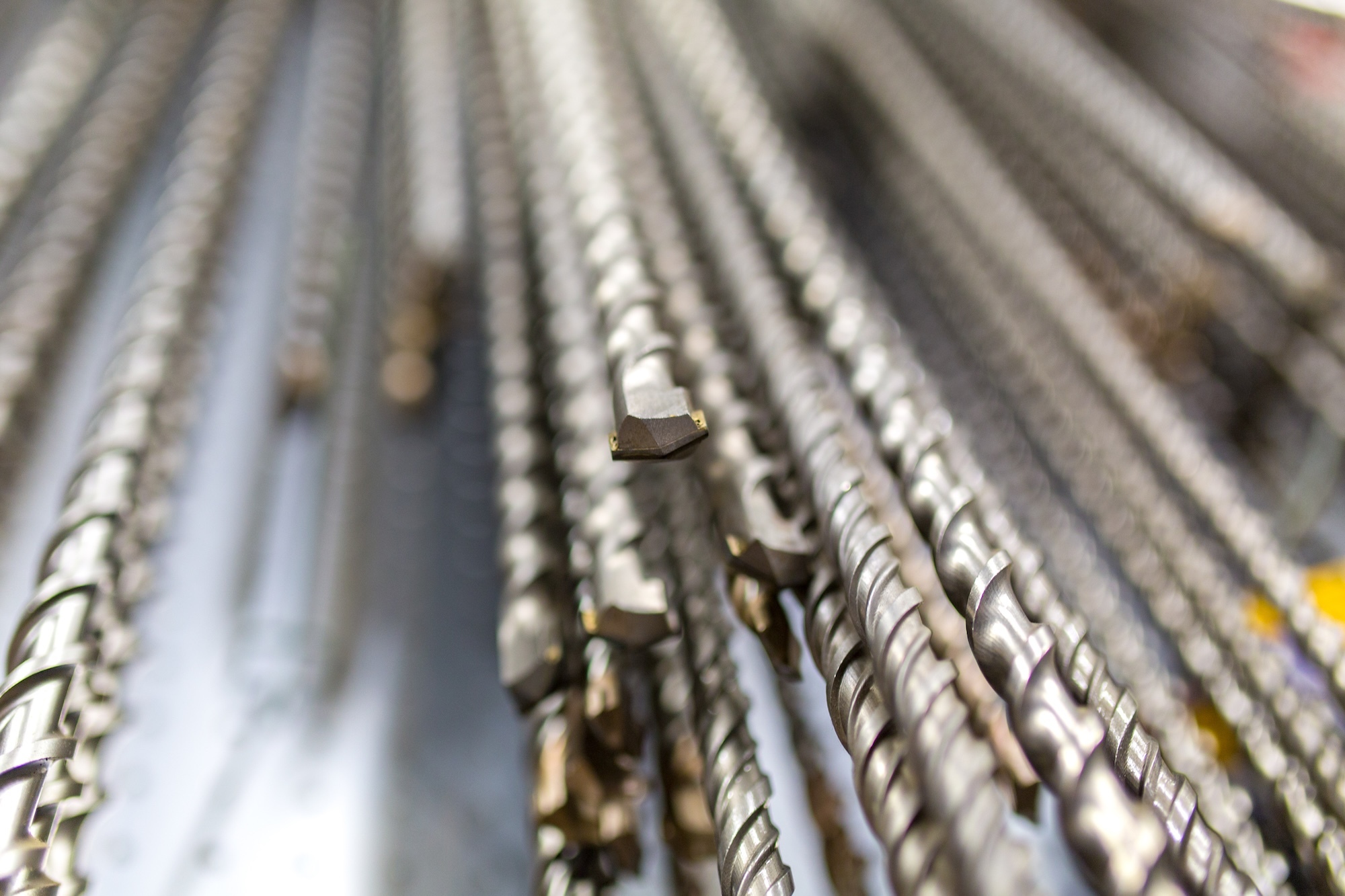
Champion Chisel Works manufactures professional-grade SDS-Plus, SDS-Max, and spline drive masonry drill bits in Rock Falls, Illinois. This guide covers how each shank system works, which one your hammer takes, and which diameters and lengths are available on each.
Where SDS Came From: Spline, SDS, SDS-Plus, SDS-Max
Spline was originally the universal shank for drilling and concrete breaking. It was largely replaced by SDS, which locks the bit in place rotationally while still letting it move back and forth under impact. SDS-Plus followed as an improved version of the original SDS shank. Spline stayed in use for larger jobs until SDS-Max was developed for heavy hammers. Spline is still common on older heavy hammers in active service, so all three systems remain on the market.
Why a Hammer Drill Bit Needs a Special Shank
A rotary hammer puts two forces into the material at once: rotation and percussive impact. SDS-Plus, SDS-Max, and spline shanks all have locking grooves machined into them, so the hammer transfers impact energy forward through the shank without losing it to slippage in the chuck. A round shank tightened in a keyed chuck can't do that efficiently, which is why a standard masonry bit won't perform in a dedicated rotary hammer.
At the cutting face, the carbide tip does the work. The carbide insert is harder than the aggregate in concrete and the fired clay in brick, so it fractures material instead of trying to slice it. Without it, the tip dulls almost immediately.
SDS-Plus vs SDS-Max vs Spline: Which Does Your Hammer Take?
| SDS-Plus | SDS-Max | Spline drive | |
|---|---|---|---|
| Shank diameter | 10mm | 18mm | External ribs |
| Hammer class | Light to mid-size rotary hammers | Heavy rotary hammers | Older heavy hammers |
| Typical work | Anchor setting, electrical rough-in, general masonry | Structural concrete, thick slabs, high hole counts | Heavy drilling on spline-drive tools |
| Single tip diameters | 5/32" to 1" | 3/8" to 1-1/2" | 3/8" to 1-1/2" |
| Quad tip diameters | — | 5/8" to 2" | 5/8" to 2" |
| Overall lengths | 8-5/8" to 13-1/8" | 13", 15", 18", 23-1/2" (quad 1-3/4" and 2") | 12", 18", 23-1/2" |
| Shop bits | SDS-Plus bits | Single tip · Quad tip | Single tip · Quad tip |
SDS-Plus uses a 10mm shank with two open grooves that let the bit slide axially while staying locked rotationally. It's standard on lighter rotary hammers, where hole diameters are smaller and hammer weight is manageable for long stretches of overhead work. If your crew runs mid-size rotary hammers from Bosch, DeWalt, or Makita for everyday drilling, SDS-Plus is almost certainly your shank. Your ceiling is 1 inch. Shop SDS-Plus tools.
SDS-Max uses an 18mm shank built for heavier rotary hammers. The larger cross-section handles more impact energy without flexing or fatiguing, which matters for large-diameter bits and deep holes in hard concrete. Your floor is effectively 3/8 inch and your ceiling is 2 inches. Shop SDS-Max tools.
Spline drive uses multiple external ribs that engage grooves in the chuck for a very secure rotational connection. Champion Chisel carries spline shank masonry bits in single tip and quad tip for crews still running spline hammers.
Shanks are not interchangeable. No adapter makes an SDS-Max shank fit an SDS-Plus chuck. Running the wrong shank risks both bit failure and damage to the hammer. Check what your hammer accepts before you order. If your work regularly calls for holes above 1 inch, that's an argument for a heavier hammer, not for forcing a bit.
Which Sizes Overlap Across Systems
The 3/8 inch through 1 inch band exists in every system, so those are the sizes worth stocking twice on a crew that carries both hammers. 5/32 inch through 1/4 inch exist only on SDS-Plus. 1-3/4 inch and 2 inch exist only as quad tip bits on SDS-Max and spline. Below 3/8 inch, use an SDS-Plus hammer: a small-diameter bit in a heavy hammer takes more impact energy than the carbide wants.
Single Tip vs Quad Tip
A single tip bit has one carbide insert ground to a point that starts fracturing quickly. It's the faster choice in softer material, standard concrete anchors, common brick, and CMU. A quad tip bit has four carbide inserts that spread the cutting load, so no single insert takes every impact. In hard aggregate concrete, abrasive masonry, reinforced concrete, and production drilling, that means longer bit life. Quad tip bits can feel slightly slower to start in soft material. Every diameter above 1-1/2 inch is quad tip only.
Choosing Length
Overall length isn't drilling depth. Part of the bit sits in the chuck, so order by the deepest hole on the job plus margin. For anchors, the anchor's data sheet gives the minimum hole depth; add the thickness of what you're fastening through. Where a diameter comes in two lengths, the shorter bit is stiffer, wanders less on start, and holds a truer hole. Use the longer one only when the depth requires it.
Drill anchor holes to the diameter on the anchor's installation data, not its nominal size. A worn bit that has lost diameter at the tip can produce undersized holes and reduce anchor pullout strength.
When to Replace a Worn Bit
If a hole that used to take ten seconds now takes thirty or forty with the same hammer and material, the carbide has lost its cutting geometry. Pull any bit with a rounded, shiny, cracked, or delaminated carbide face, and pull a bent bit immediately: it won't cut straight and stresses the chuck.
Frequently Asked Questions
What is the difference between SDS-Plus and SDS-Max?
SDS-Plus uses a 10mm shank for light to mid-size rotary hammers and bits up to 1 inch. SDS-Max uses an 18mm shank for heavy rotary hammers and bits up to 2 inches. They don't fit each other's chucks.
Can an SDS-Plus rotary hammer drill a 1-1/2 inch hole?
Not with Champion Chisel bits. SDS-Plus single tip bits top out at 1 inch. A 1-1/2 inch bit is made on SDS-Max or spline shanks, which need a heavier hammer.
Can I use a standard masonry bit in an SDS rotary hammer?
Not without a chuck adapter, and doing so bypasses the locking grooves that transfer impact energy. The bit won't drill efficiently and can damage the chuck.
What is the largest SDS bit available?
A 2 inch quad tip bit on SDS-Max or spline shank, 23-1/2 inches overall.
Does Champion Chisel still make spline bits?
Yes, in single tip and quad tip, 3/8 inch to 2 inches.
|
2M+
Chisels Forged
|
50M+
Lbs US Steel
|
2,400+
Customers Worldwide
|
Champion Chisel Works, Inc. - family-owned and American-made in Rock Falls, Illinois since 1968. Tough Jobs. Tough Tools. One Source.
| Contact Us | Shop All Tools |