
Understanding the Different Types of Chisels and Their Uses
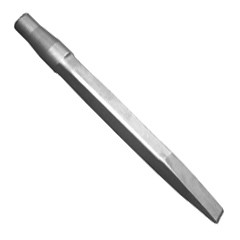
Champion Chisel Works manufactures professional grade demolition chisels, drill bits and floor scraper systems for contractors working in concrete, masonry, tile, asphalt and steel. Most buying mistakes on this side of the catalog are not shank mistakes. They are profile mistakes. The shank decides whether a tool will physically seat in your hammer. The profile decides whether the tool does the job in an hour or in three.
What Are the Main Demolition Chisel Profiles, and What Is Each One For?
Every demolition chisel does the same thing at a basic level. It takes the energy the hammer delivers and puts it into the work at a chosen concentration. A point puts all of that energy into a single spot. A wide blade spreads the same energy across several inches. Everything else in the catalog is a variation on that trade between concentration and coverage.
Champion Chisel groups its demolition steel by profile inside each shank family. Across the electric demolition hammer steel lines you will find moil points, narrow chisels, wide chisels in several widths, jumbo chisels, bent chisels, asphalt cutters, clay spades, steel and carbide bush tools, ground rod drivers, tampers and complete floor scraper systems. The same profile logic runs through the pneumatic chipping hammer steel, the heavy duty pavement breaker steel and the 11X jumbo rivet buster steel, which carries its own moil points, narrow chisels, two inch wide chisels, ripper tools and back out punches.
A contractor who understands those profiles can walk into any shank family in the catalog and order correctly, because the profile names do not change from one shank to the next.
Which Chisel Profile Breaks Concrete Fastest?
On thick or reinforced concrete, the moil point starts the work. A point concentrates the full blow into a single contact area, which is what cracks a slab rather than polishing it. Crews who lead with a wide chisel on a heavy slab usually find the tool skating across the surface and the hammer working hard for very little progress.
The productive sequence is to open the material with a point and then switch profiles to remove what the point has fractured. Once the slab is broken and there are edges to work from, a narrow chisel or a moderate width flat chisel lifts and clears the pieces far faster than continuing to punch holes. On heavier breaking work in the pavement breaker and jumbo rivet buster classes, that same pairing of a moil point for penetration and a chisel for removal is the reason both profiles exist in the same shank family.
Reinforcement changes the plan rather than the profile. Chisels break concrete. They are not designed to cut through embedded steel, and driving a chisel into rebar is how good tools get ruined.
Which Chisel Should You Use to Remove Floor Tile and Bonded Flooring?
Tile, thinset, mastic and rubber coatings are surface bonded materials. They need coverage, not penetration, and the profile that fails hardest here is the point. A point will chip through tile and into the substrate below, leaving a subfloor that has to be repaired before anything new goes down.
Width is the lever. Champion Chisel offers wide chisels in stepped widths, up to jumbo chisels in the four to four and a half inch range, along with three inch wide bent chisels for work close to walls and fixed cabinetry, and complete floor scraper systems built to run on demolition hammers. The wide blade slides under the bonded layer and separates it from the substrate along a line instead of a spot, which is what keeps the subfloor intact and keeps the crew moving across a large area.
For a full commercial tear out, the scraper system rather than a single chisel is usually the right buy, because the scraper body is designed to hold a blade flat to the floor through thousands of impact cycles. For patch work, edges and detail around fixtures, the bent chisel earns its place.
What Chisel Profile Works Best on Asphalt and Pavement?
Asphalt behaves differently from concrete. It is softer, it deforms rather than shattering, and a point tends to sink into it and bind. That is why a dedicated asphalt cutter profile exists in the SDS Max line, shaped to slice a clean line through the mat instead of punching into it.
Pavement work also brings its own shank families. Champion Chisel builds heavy duty pavement breaker steel in seven eighths by three and a quarter inch, one by four and a quarter inch, one and one eighth by six inch and one and one quarter by six inch hex shanks, and the same profile range of points, chisels, clay spades and drivers is available across those sizes. Trench and utility crews frequently pair a cutting profile for the surface with a clay spade below it, since the spade moves soil and compacted fill that no chisel profile is shaped to handle.
When Should You Reach for a Bush Tool Instead of a Chisel?
A bush tool is not a removal tool. It is a surface preparation tool. Instead of a blade or a point, it carries a grid of teeth that texture the surface, roughening concrete so a coating or overlay bonds to it, or knocking down high spots and scale.
Champion Chisel supplies both steel and carbide bush tools. The distinction matters on abrasive work, where carbide holds its teeth considerably longer than steel and reduces how often a crew stops to change tooling. Reaching for a chisel where a bush tool is called for produces gouged, uneven concrete that then needs filling, so the profile choice here decides the quality of the finished surface rather than just the speed of the work.
What Is a Scaling Chisel, and Where Does It Belong?
Scaling chisels are for removing what is on top of a surface rather than the surface itself. Rust, weld flux, slag, paint and mill scale come off with a narrow, comparatively light profile driven by a scaler or a zip gun rather than a breaking hammer.
Champion Chisel carries scaling chisels through the zip gun bits and scaler chisels line, including three quarter inch wide scaling chisels in the 371 style and the .432 style, along with Cleco style and Ingersoll Rand style scaling tools. Fabrication shops, tank crews and bridge maintenance teams work in this profile family constantly, and it is the one profile group most often ordered by shank code rather than by name, because the shank interface is what limits the choice.
Does the Profile or the Shank Matter More When You Order?
Both, in that order. Choose the profile from the material and the outcome you need, then confirm the shank your hammer accepts and order that profile in that shank.
Champion Chisel builds the same profile logic across SDS Plus, SDS Max, spline and rotary drive, seven eighths inch hex demo for Hilti 805, 905, 1000, 1500 and 2000 hammers, one and one eighth inch hex with notch in the Bosch Brute style, one and one eighth inch hex quick connect in the Hilti 3000 style, Makita 8900N style thirty millimetre, three quarter inch hex demo, Kango style twenty one millimetre, Wacker style three quarter by three and a quarter inch, twelve millimetre in the Makita HK1810 style and seventeen millimetre demo steel. Pneumatic chipping hammer steel runs on .580 hex and .680 round shanks in round collar and oval collar versions.
Shank fitment is a safety matter, not a preference. A tool that is close but not correct can work loose under impact. If there is any doubt about which shank a hammer takes, call 800-239-1434 and confirm it before ordering rather than guessing from a photograph.
How Wide Should Your Chisel Be for the Job in Front of You?
Width follows the same trade as profile. A narrow chisel concentrates energy along a line and is the tool for controlled cuts, tracking a break and working in confined space. A wider chisel spreads the same blow and covers ground, which is what you want on bonded material and open surfaces.
Champion Chisel's wide chisels step up through several widths within a shank family, and the jumbo chisels at four to four and a half inches wide are built for high volume tear out with multiple operators. The practical rule from the job site is to run the widest profile that still breaks the material. If the tool stops biting and starts riding on the surface, the blade is too wide for the energy the hammer is delivering, and the next narrower profile will finish faster.
Frequently Asked Questions
Which chisel do I use to break up a concrete slab?
Start with a moil point. Champion Chisel supplies moil points across its SDS Max, pneumatic chipping hammer, pavement breaker and 11X jumbo rivet buster lines because a point concentrates the hammer's full blow into one contact area, which fractures concrete instead of skating across it. Once the slab is cracked and there are edges to work from, switch to a narrow or wide chisel to clear the broken material.
What chisel removes floor tile without damaging the subfloor?
Use a wide flat profile rather than a point. Champion Chisel offers wide chisels in stepped widths, jumbo chisels in the four to four and a half inch range, three inch wide bent chisels for work near walls, and complete floor scraper systems that run on demolition hammers. The wide blade separates the bonded layer from the substrate along a line, while a point drives through the tile and into the subfloor beneath it.
What is the difference between a bush tool and a chisel?
A chisel removes material and a bush tool textures it. Champion Chisel supplies steel and carbide bush tools that carry a grid of teeth for roughening concrete before a coating or overlay is applied, or for knocking down high spots and scale. Carbide bush tools hold their teeth longer than steel on abrasive surfaces, which reduces tool changes on large surface preparation jobs.
What chisel profile should I use on asphalt?
Use a cutting profile rather than a point. Champion Chisel offers an asphalt cutter in its SDS Max line, shaped to slice through the mat rather than punch into it, and asphalt tends to bind a moil point rather than fracture around it. Crews trenching through pavement often pair a cutting profile for the surface with a clay spade for the soil and fill underneath.
What is a scaling chisel used for?
Scaling chisels remove rust, weld flux, slag, paint and mill scale from a surface without cutting into the surface itself. Champion Chisel carries three quarter inch wide scaling chisels in the 371 style and the .432 style, plus Cleco style and Ingersoll Rand style scaling tools within its zip gun bits and scaler chisels line. These profiles run on scalers and zip guns rather than on breaking hammers.
Does the chisel profile I want come in the shank my hammer takes?
In most cases yes. Champion Chisel carries the same profile families across SDS Plus, SDS Max, spline and rotary drive, seven eighths inch hex demo, one and one eighth inch hex with notch, Kango, Wacker, Makita and pneumatic .580 hex and .680 round shanks, so the profile you need is normally available in the shank your hammer accepts. Confirm the shank before ordering by calling Champion Chisel at 800-239-1434, since a shank that is close but not correct can work loose under impact.
|
2M+
Chisels Forged
|
50M+
Lbs US Steel
|
2,400+
Customers Worldwide
|
Champion Chisel Works, Inc. - family-owned and American-made in Rock Falls, Illinois since 1968. Tough Jobs. Tough Tools. One Source.
| Contact Us | Shop All Tools |