
Air Hammer & Breaker Bit Shapes Explained: Which Bit for Which Job
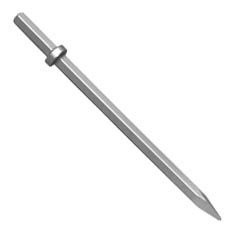
Start with the shank, not the shape
Before shape ever matters, the bit has to fit the tool. The shank is the top end of the steel that seats in the collet, and it is the one spec you cannot fudge. Champion builds breaker steel in the shank sizes the trade actually runs: 1 × 4-1/4 inch, 7/8 × 3-1/4 inch, 1-1/8 × 6 inch, and 1-1/4 × 6 inch hex for pneumatic pavement breakers, plus 1-1/8 inch hex-with-notch for Bosch/Brute-style electric demolition hammers and SDS-max for rotary hammers. Chipping hammers run smaller .580 hex and .680 round shanks. Measure the shank on your current bit before you order, and if you only know the make and model of the tool, we can cross-reference the shank for you. Everything below assumes the shank already matches your pavement breaker or chipping hammer.
The moil (bull) point: your starter bit
The moil point - the trade also calls it a bull point - tapers to a single point. That geometry concentrates the entire blow of the breaker onto one spot, which is exactly what you want to punch through a slab and start cracks. It is almost always the bit you reach for first: drive it in, start the fractures, then switch to a chisel to follow and open them. Because a moil point does not clear area, it is not the bit to finish a break with, but nothing beats it for penetration. Champion stocks moil points in every breaker shank and in a range of lengths - from an 18-inch point on a 7/8 × 3-1/4 shank up to a 60-inch point on a 1-1/4 × 6 shank for reaching down into deep breaks - and even a 12-inch SDS-max moil point for electric hammers.
Narrow and wide chisels: following and clearing the break
Where the moil point starts a break, the chisel finishes it. A chisel spreads the blow along a straight cutting edge, so it follows cracks, works cleanly along an edge, and shears material loose in pieces. The width you choose sets the trade-off: a narrow chisel cuts a tighter, more controlled line and is the tool for trenching a slab, cutting rebar, or raking a joint; a wide chisel covers more area per pass and clears broken material faster. Champion's 3-inch wide chisel on a 1-1/8 × 6 shank is a workhorse for opening up floors and pavement, and the same profile is offered sized for 60-lb and 90-lb hammers. Run a narrow chisel when precision matters and a wide chisel when you are clearing.
Spades, clay diggers, and asphalt cutters: shaped for the material
Some jobs call for a blade shaped for a specific material rather than a general chisel. A clay spade or clay-digger bit has a broad, slightly dished blade that cuts and lifts soil and clay instead of shattering it - the right choice for utility trenching, digging around buried pipe, and breaking frost. An asphalt cutter is a wide, thin blade tuned to shear a blacktop mat loose in slabs so you can lift it, rather than pulverizing it the way a moil point would. Using the bit that matches the material is not a nicety; a clay spade in concrete or a moil point in soft asphalt both waste energy and wear the steel prematurely.
Specialty steel: gouges, scaling chisels, and bushing tools
Beyond the core shapes, a few specialty bits earn their place in the box. A gouge (a curved, channel-shaped blade) is used for trenching and for cutting a defined channel - think chasing a line for conduit or drainage. Scaling chisels concentrate a lighter blow for knocking scale, coatings, and slag off metal. And bushing tools - a head studded with hardened teeth - texture and knock down concrete rather than break through it; Champion offers steel and carbide bush tools for exactly that. The point is that "breaker steel" is not one thing: it is a family of shapes, each optimized for a different action.
Quick reference: bit shape by job
| Job | Start with | Then switch to |
|---|---|---|
| Breaking a concrete slab or footing | Moil (bull) point | Narrow or wide chisel to open and clear |
| Cutting & lifting asphalt | Moil point | Wide chisel / asphalt cutter |
| Trenching soil, digging clay, breaking frost | Clay spade / clay digger | Moil point for rock or hardpan |
| Cutting a channel for conduit or drainage | Gouge | Narrow chisel |
| Texturing or knocking down high concrete | Bushing tool | Wide chisel |
| Removing scale, coatings, or slag from steel | Scaling chisel | - |
Every shape, one standard of steel
Whatever the shape, the value of a bit is in how long it holds its edge under a percussion tool that is hitting it thousands of times a minute. Champion has forged breaker and chipping steel in Rock Falls, Illinois since 1968, and every bit is made in the USA to run at the tool's rated 90 PSI. Keep the steel matched to the job, keep the tool oiled with SAE 10W-20, and you get full life out of both. Browse the full range of pavement breaker steel and chipping hammer steel, or call and we will spec the right bit for your tool and your material.
Frequently asked questions
What is a moil point used for?
A moil point (or bull point) ends in a single point that concentrates the full blow of the tool onto one spot. It is the bit you start a break with - punching through concrete, asphalt, or rock and starting the cracks that a chisel then follows and opens. Because it focuses all the energy on one point, it penetrates hard material faster than a flat blade.
What is the difference between a moil point and a chisel bit?
A moil point concentrates energy on a single point to start a break and punch through hard material; a chisel spreads that energy along a straight edge to follow cracks, work along an edge, and shear material loose. Most demolition goes fastest when you start with a moil point and switch to a narrow or wide chisel to open and clear the break.
How do I know which bit fits my breaker?
Match the bit's shank to the collet on your tool. Champion breaker steel comes in the common pneumatic shanks - 1 × 4-1/4 inch, 7/8 × 3-1/4 inch, 1-1/8 × 6 inch, and 1-1/4 × 6 inch - plus 1-1/8 inch hex-with-notch for electric demolition hammers and SDS-max for rotary hammers. Measure the shank on your current bit, or give us the make and model of the tool and we will confirm the right shank.
Which bit should I use to break asphalt versus dig clay?
For asphalt, start a break with a moil point and switch to a wide chisel or asphalt cutter to shear the mat loose in slabs. For soil and clay, run a clay spade or clay digger, which is shaped to cut and lift earth rather than shatter stone. Using the bit shaped for the material is what keeps the tool moving and protects the steel.
|
2M+
Chisels Forged
|
50M+
Lbs US Steel
|
2,400+
Customers Worldwide
|
Champion Chisel Works, Inc. - family-owned and American-made in Rock Falls, Illinois since 1968. Tough Jobs. Tough Tools. One Source.
| Contact Us | Shop All Tools |