
Air Tool Oil: What to Use and How to Keep Your Pneumatic Tools Alive
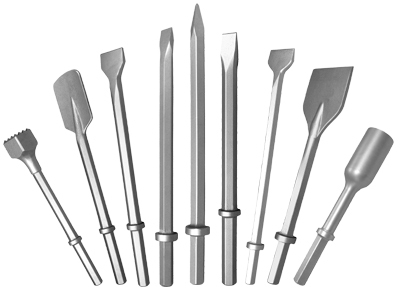
A pneumatic tool has no crankcase, no oil pump, and no dipstick. The only lubrication a chipping hammer, pavement breaker, or rivet buster ever gets is the oil you put into it. Skip that step and the piston, valve, and cylinder wear against each other dry, at more than a thousand blows a minute, until the tool loses power and eventually seizes. Add the right oil, on a schedule, and the same tool runs strong for years. At Champion Chisel Works, we have been building and supplying air tools out of Rock Falls, Illinois since 1968, and lubrication is far and away the cheapest, highest-payback thing an operator can do to protect that investment.
This guide covers what oil to use, whether a substitute is ever acceptable, and how to actually get oil into the tool so it stays protected through a full shift.
Why air tools have to be oiled by hand
A percussion air tool converts compressed air into a hammering piston. That piston reciprocates inside a steel cylinder, and the throttle valve cycles constantly, all lubricated only by whatever oil is riding in the air stream. Compressed air also carries moisture, and moisture plus bare steel equals rust. Oil does three jobs at once here: it builds a film between moving parts, it flushes out fine grit and carbon, and it displaces the water that condenses inside the tool. Starve the tool of oil and you get the classic symptoms - a hammer that hits soft, a throttle that sticks, or internal parts that gall and score. Most of the failures we walk customers through in our chipping hammer troubleshooting guide trace back to a tool that simply was not getting enough oil.
What oil to use: SAE 10W-20
The short answer is a non-detergent pneumatic tool oil, and for Champion air tools the recommended weight is SAE 10W-20. Viscosity is the whole game. Too thin and the oil blows straight through without building a film; too thick and it will not atomize into the air stream or reach the piston at operating pressure. A 10W-20 air tool oil is light enough to travel with the air and heavy enough to cling to internal surfaces and carry moisture out the exhaust. Just as important is what the oil does not contain: detergents. Motor oil is engineered to hold combustion byproducts in suspension inside an engine, and those same detergent and additive packages can leave varnish on air tool valves and attract abrasive dust.
Can you use an air tool oil substitute?
This is one of the most common questions we hear, and the honest answer is: a substitute will get you through an emergency, but it is not a plan. If the tool is about to run dry and all you have is a light, non-detergent oil of roughly the same viscosity, that beats running it dry - dry is what actually kills the tool. What you want to avoid as a habit is reaching for the wrong bottle. Detergent motor oil gums up valves over time. Automatic transmission fluid is too thin and loaded with friction modifiers. Household 3-in-1 oils are usually far too light to build a working film under load. None of them are formulated for a moisture-laden air stream and constant impact. Buy a proper air tool oil in the SAE 10W-20 weight and keep it with the compressor so the substitute question never comes up.
Rock drills are the one place operators reasonably ask about a different product. Rock drilling generates extreme heat and shock, so a dedicated rock drill oil is often tackier and heavier than general air tool oil to stay put under those conditions. For chipping hammers, breakers, scaling hammers, and rivet busters, standard SAE 10W-20 air tool oil is the right call.
How to oil your air tools: by hand and in-line
There are two ways to keep a tool lubricated, and the best shops use both. The manual method is simple: with the tool disconnected, put a few drops of air tool oil directly into the air inlet before you start for the day, and again every couple of hours of continuous running. Reconnect, and the first few strokes distribute the oil through the mechanism. It works, but it depends on someone remembering.
The reliable method is an in-line oiler. Champion's Medium 3.7 oz In-Line Oiler (part ILO-M, $84.29) installs right between your air supply and the tool and meters oil into the air stream automatically, so the tool receives a steady mist of lubricant the entire time it runs. Its 3.7-ounce reservoir is sized to balance run time against portability on the jobsite, and it works across the whole family of demolition tools - chipping hammers, rivet busters, pavement breakers, and scaling hammers. For any operator who runs a tool for more than a few minutes at a stretch, an in-line oiler removes the single biggest variable in tool longevity: human memory. You will find it alongside our other retainers, swivels, and accessories.
Moisture, cold weather, and storage
Oil is also your first line of defense against rust. Compressed air is wet, and a tool that sits over a weekend with water inside it can flash-rust internally. Before you put a tool away, run a little extra oil through it and let it cycle for a few seconds - that coats the internals for storage. In cold weather, condensation and even freezing in the air line become a bigger problem, so drain your compressor tank and lines and consider an air-line antifreeze/lubricant in the oiler. Our deeper walkthroughs on maintaining your air tools and extending their lifespan lay out a full seasonal routine, and the same discipline applies to the working end of the tool - see our notes on air chisel bit maintenance.
Lubrication and your warranty
It is worth being blunt about the connection between oil and coverage. Champion air tools carry a 180-day warranty, and that warranty assumes the tool is run at 90 PSI and kept lubricated. A tool that comes back scored, galled, and bone-dry tells its own story. Proper oiling is not just about squeezing more months out of a hammer - it is the condition under which the tool is designed and warranted to perform. A four-dollar habit protects a tool that can cost well over a thousand dollars.
Frequently Asked Questions
What oil should I use in my air tools?
Use a non-detergent pneumatic tool oil in the weight the manufacturer specifies. Champion Chisel recommends SAE 10W-20 for its air tools. That viscosity is light enough to atomize and reach the piston at 90 PSI, but heavy enough to cling to internal parts and carry moisture away. Avoid detergent motor oils, which are formulated for engines, not percussion tools.
Can I use a substitute for air tool oil?
In a pinch, a light non-detergent oil of similar viscosity is better than running a tool dry, but it is not a long-term fix. Motor oil contains detergents that can gum up valves and attract grit, ATF is too thin and full of friction modifiers, and 3-in-1 style oils are usually too light. The right answer is a dedicated air tool oil in the SAE 10W-20 weight Champion specifies.
How often should I oil my air tools?
Add a few drops of oil into the air inlet before each use and again every couple of hours of continuous running. The easier and more reliable method is an in-line oiler installed between the hose and the tool, which meters oil into the air stream automatically so the tool is never starved during a long shift.
Do I need an in-line oiler?
If you run a chipping hammer, pavement breaker, rivet buster, or scaling hammer for more than a few minutes at a stretch, an in-line oiler pays for itself in tool life. Champion's Medium 3.7 oz In-Line Oiler (ILO-M) sits between the air supply and the tool and delivers continuous lubrication, so you are not relying on memory to keep the tool oiled.
|
2M+
Chisels Forged
|
50M+
Lbs US Steel
|
2,400+
Customers Worldwide
|
Champion Chisel Works, Inc. - family-owned and American-made in Rock Falls, Illinois since 1968. Tough Jobs. Tough Tools. One Source.
| Contact Us | Shop All Tools |