
Mortar Removal and Tuckpointing: The Right Tools for Cutting Out Old Joints
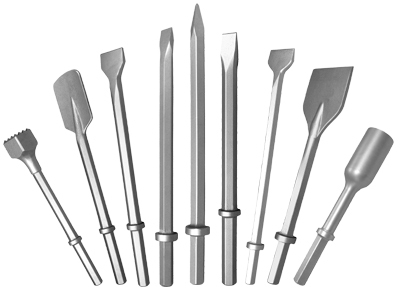
Every good repointing job starts with a bad-looking one: the old, crumbling mortar has to come out before fresh mortar can go in. That removal step is where masonry restoration is won or lost. Rake the joints out cleanly to a consistent depth and the new pointing bonds tight and lasts for decades. Chew up the brick edges or leave the old mortar too shallow, and the repair looks rough and fails early. The difference almost always comes down to the tool in your hand and the bit on the end of it. Champion Chisel Works has built demolition and masonry steel in Rock Falls, Illinois since 1968, and mortar removal is one of the jobs our narrow chisels were made for.
What tuckpointing actually asks of a tool
Tuckpointing - more precisely, repointing - means cutting the deteriorated mortar out of the joints and replacing it. To give the new mortar something to grip, you generally need to remove the old material to a depth of about two-thirds to three-quarters of an inch, and you need that depth to be reasonably uniform along the joint. The catch is that a brick is softer and more brittle than most people assume. A tool that is too wide, too aggressive, or worked at the wrong angle will ride up onto the brick faces and chip the arrises, and those nicks are permanent. So the job has two requirements at once: remove hard old mortar efficiently, and stay off the brick while you do it. The right bit is what satisfies both.
Hand tools versus power - and why the bit is the answer
A mason with a plugging chisel and a hammer can absolutely rake a joint by hand, and for a small patch that is still the right call. But for a wall, hand work is slow and hard on the wrist, and consistency suffers as you tire. The production answer is a powered percussion tool - a light chipping hammer or an electric demolition hammer - fitted with a narrow chisel. The narrow blade is the hero here: it is slim enough to drop into the joint and cut the mortar line, so the energy goes into the mortar and not into prying against the masonry.
Champion offers narrow chisels on both sides of the tooling fence. For pneumatic chipping hammers, the .580″ hex shank narrow chisel (part C5812RC, 12″, $17.20) is an inexpensive, replaceable bit that fits the common chipping-hammer retainer. For corded demolition hammers, the 24″ SDS-max narrow chisel (part MC24, $48.70) is listed specifically for trenching, channeling, and joint cleanup - exactly the reach and profile you want for raking out bed joints. Both are stocked in multiple lengths so you can match the tool to the wall.
Choosing the tool: control first
For tuckpointing, control beats raw power. A lighter tool with a shorter stroke lets you steer the chisel down the joint instead of fighting it. Champion's mini 4-bolt chipping hammers run a short 2.6″ stroke that is well suited to that kind of precise, repetitive work, and they are offered in oval-collar, round-collar, and quick-change retainers to fit .580″ hex or .680″ round shank chisels (for example, the oval-collar AT-CHMNH-O at $719.99). If you would rather work corded and skip the compressor, an electric demolition hammer running an SDS-max narrow chisel covers the same job with plug-in convenience. Either way, the pairing is the same idea: a manageable tool plus a narrow blade.
Technique: rake the mortar, spare the brick
Set the wall up for success before you start cutting. Work the horizontal bed joints first, then the vertical head joints, so you are never trapping the chisel in a corner. Hold the chisel at a shallow angle and let it travel along the joint, shaving the mortar line rather than stabbing straight in. Keep the depth consistent - pick your target depth and check it as you go - and resist the urge to lever the tool sideways against the brick to pop a stubborn chunk; that sideways force is what scars masonry. On old, hard mortar, take two lighter passes instead of one heavy one. When the joints are cut, brush and blow the dust out completely and dampen the surface per your mortar's directions so the fresh pointing bonds to clean, sound material. For a wider look at bit shapes and where each one shines, our guide to demolition bits is a useful companion.
The same kit, more jobs
The narrow-chisel-plus-percussion-tool combination is not a one-trick setup. The same tools handle stucco and parge coat removal, chasing channels for conduit or pipe, knocking out old thinset, and general masonry cleanup. That versatility is part of why a mason's chipping hammer and a small set of chisels earn their keep - buy once, and the kit follows you from repointing a chimney to prepping a floor. Browse the full pneumatic chipping hammer steel selection to build out the shapes you use most.
Frequently Asked Questions
What is the best tool to remove mortar?
For anything beyond a few feet of joint, a narrow chisel driven by a light chipping hammer or an electric demolition hammer is the fastest, most controlled way to remove mortar. The narrow blade fits into the joint and cuts the mortar without prying against the brick faces. Champion offers narrow chisels in pneumatic .580 hex shanks and in SDS-max for corded demolition hammers.
How do you remove mortar without damaging the brick?
Use a narrow chisel that fits inside the joint rather than a wide blade that rides on the brick, hold it at a shallow angle so it cuts along the mortar line, and keep the depth consistent - usually about two-thirds to three-quarters of an inch for repointing. Work the bed joints first, then the head joints, and let the tool cut the mortar instead of levering against the masonry.
Can you use a chipping hammer for tuckpointing?
Yes. A light chipping hammer fitted with a narrow chisel is a standard tuckpointing setup. Champion's mini 4-bolt chipping hammers run a short 2.6-inch stroke that gives you control in the joint, and they accept .580 hex or .680 round shank chisels. For larger jobs many masons prefer a corded demolition hammer with an SDS-max narrow chisel.
What is a mortar rake?
A mortar rake is a tool that clears out the surface of a joint to a set, shallow depth, often used on an angle grinder or as a hand tool for light raking. For deeper removal ahead of repointing, or for hard, old mortar, a narrow chisel in a chipping or demolition hammer removes material faster and to a more controlled depth.
|
2M+
Chisels Forged
|
50M+
Lbs US Steel
|
2,400+
Customers Worldwide
|
Champion Chisel Works, Inc. - family-owned and American-made in Rock Falls, Illinois since 1968. Tough Jobs. Tough Tools. One Source.
| Contact Us | Shop All Tools |