
What Is a Rivet Buster? Choosing the Right Pneumatic Rivet Buster
When a job calls for cutting structural steel, shearing rivets off an old bridge, or tearing into heavy concrete that a chipping hammer only bounces off, the tool that comes out of the truck is a rivet buster. It's one of the hardest-hitting air tools on any site - and one of the most misunderstood at the point of purchase, because buyers shop for the bits long before they think about the tool that swings them. This guide fixes that. Here's what a rivet buster actually is, how the models differ, and how to choose one that matches your work.
What a rivet buster does
A rivet buster is a large-bore pneumatic hammer purpose-built for high-impact demolition. It was born on the railroads and bridges, where crews needed a tool that could pop the heads off hot-driven rivets and cut through riveted plate. That heritage still defines it: long stroke, heavy reciprocating piston, and a jumbo-shank tool holder that swings serious cutting and busting steel. Fit it with a rivet-cutter or chisel and it shears steel; fit it with a moil or a wide chisel and it becomes a heavy concrete breaker for foundations, piers, and bridge decks.
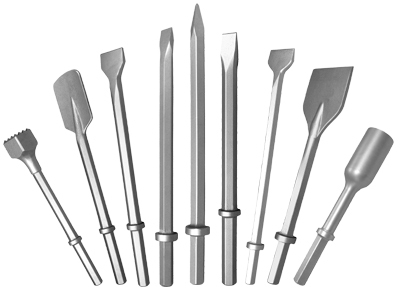
That's the key mental shift for buyers: the rivet buster is the engine, and the jumbo rivet buster steel is the interchangeable business end. A contractor who already ranks the bits high on their shopping list should spend equal time on the tool, because the tool determines how much energy those bits ever see.
Reading the specs that matter
Champion Chisel builds its rivet busters in open-handle and closed-handle configurations. Take the 11" Stroke Rivet Buster, Open Handle (AT-RBA11-OH) as the benchmark: it runs a 1-3/16-inch bore, an 11-inch stroke, and 850 blows per minute, weighs 33 pounds, measures 25.5 inches overall, feeds through a 1/2-inch air inlet bushing, and averages 50 CFM at 90 PSI. Those numbers describe a tool meant to be planted and driven, not waved around.
Also available: 8" Stroke Rivet Buster, Open Handle (AT-RBA08-OH), plus closed-handle versions.
8-inch vs. 11-inch stroke: how hard do you need to hit?
Stroke length is the single biggest lever on a rivet buster's character. A longer stroke means the piston travels farther and hits harder, which is exactly what you want when you're cutting thick plate or breaking heavy concrete all shift. The 11-inch AT-RBA11-OH is the heavy hitter - the tool for the worst of the work. The 8-inch AT-RBA08-OH gives up a little raw impact in exchange for being lighter in the hands and easier to control, which pays off in overhead work, tighter quarters, and jobs where operator fatigue - not brute cutting - is the limiting factor.
If your crew spends its days on structural steel and bridge demolition, buy the stroke. If the tool is a periodic heavy-hitter that also has to be manageable for a range of operators, the 8-inch is the friendlier choice.
Open-handle vs. closed-handle
Handle style comes down to grip and control preference. Open-handle rivet busters give an unobstructed, two-handed hold that a lot of operators favor for cutting and prying - you can choke up on the tool and steer it precisely. Closed-handle models enclose the throttle in a full grip that some crews prefer for straight-ahead breaking. Neither is "better"; it's a question of how your operators like to hold a heavy tool for eight hours. When in doubt, put both in front of the crew that'll run them.
Feeding the beast: air and upkeep
A rivet buster is thirsty. At roughly 50 CFM at 90 PSI, the 11-inch model needs a compressor with real output behind it - this is a tow-behind or large stationary-compressor tool, not something you'll run happily off a small portable. Undersize the air and you'll feel it instantly as weak, slow blows. Keep the pressure at 90 PSI at the tool, run a proper 1/2-inch supply, and oil it daily with SAE 10W-20. For help matching a compressor to a rivet buster and the rest of your fleet, see our guide on sizing air for pneumatic tools, and keep spares moving with jumbo rivet buster parts and accessories.
Champion Chisel has been manufacturing rivet busters and the steel that goes in them in Rock Falls, Illinois since 1968. Every air tool is American-made, rated to 90 PSI, and backed by a 180-day warranty - and there's a real person on the phone who's happy to talk through stroke length and shank before you spend a dime.
Frequently asked questions
What is a rivet buster used for?
A pneumatic rivet buster is a heavy air hammer built to shear off rivet heads and cut structural steel. It's a standard tool for bridge and steel-structure demolition, tank and boiler work, and heavy jobs where a chipping hammer is too light - and fitted with a cutting or chisel bit it also busts concrete and handles general heavy demolition.
What is the difference between an 8-inch and 11-inch stroke rivet buster?
Stroke length sets how hard the tool hits. Champion Chisel's 11-inch AT-RBA11-OH delivers a longer, more powerful stroke for the heaviest cutting and demolition, while the 8-inch AT-RBA08-OH is a bit lighter and easier to control for lighter-duty or more confined work. Both are open-handle designs that take jumbo-shank tooling.
How much air does a rivet buster need?
Champion Chisel's 11-inch rivet buster (AT-RBA11-OH) averages about 50 CFM at 90 PSI, with a 1/2-inch air inlet bushing. Plan your compressor around that figure plus headroom, and run the tool at 90 PSI for rated performance.
What is the difference between open-handle and closed-handle rivet busters?
The handle style is about grip and control. Open-handle rivet busters give an unobstructed two-hand hold that many operators prefer for cutting and prying, while closed-handle models put the throttle inside a full grip. Champion offers both.
|
2M+
Chisels Forged
|
50M+
Lbs US Steel
|
2,400+
Customers Worldwide
|
Champion Chisel Works, Inc. - family-owned and American-made in Rock Falls, Illinois since 1968. Tough Jobs. Tough Tools. One Source.
| Contact Us | Shop All Tools |